


17/11/2026 by GenEra
Weight-loss medications and genetics — why can the same medication have different effects on different people?
In recent years, weight management medications have become one of the most widely discussed advances in modern medicine. Active substances such as semaglutide and tirzepatide have significantly changed the approach to treating overweight and obesity, offering additional options for people for whom lifestyle changes alone are not sufficient.
However, there is an interesting detail: even when taking the same medication at similar doses, people's responses to treatment can vary considerably. One person may experience very good results, another may have a more moderate response, while someone else may experience pronounced side effects.
Why does this happen? One of the factors that can influence the body's response to medication is our genetics.
How do modern weight-loss medications work?
Weight regulation is a complex process involving the brain, digestive system, hormones, metabolism and other mechanisms in the body. This is why modern weight-loss medications act on different mechanisms involved in weight regulation, for example, by influencing appetite, feelings of fullness and energy intake.
GLP-1 Receptor Agonists – Semaglutide and Liraglutide
Perhaps the best-known group of weight management medications is GLP-1 receptor agonists. These include semaglutide (found, for example, in medications such as Wegovy and Ozempic) and liraglutide (Saxenda).
To understand how they work, it is helpful to first become familiar with one of the body's natural hormones – GLP-1, or glucagon-like peptide-1.
GLP-1 is released in the intestines after a meal and helps the body regulate blood glucose levels and appetite. When blood glucose levels rise, it stimulates insulin release, slows gastric emptying and acts on brain centres associated with feelings of fullness and hunger.
GLP-1 receptor agonists mimic the action of this hormone by activating the corresponding receptors. As a result, a person may feel full for longer, experience reduced hunger and desire to eat, and consume less food overall.
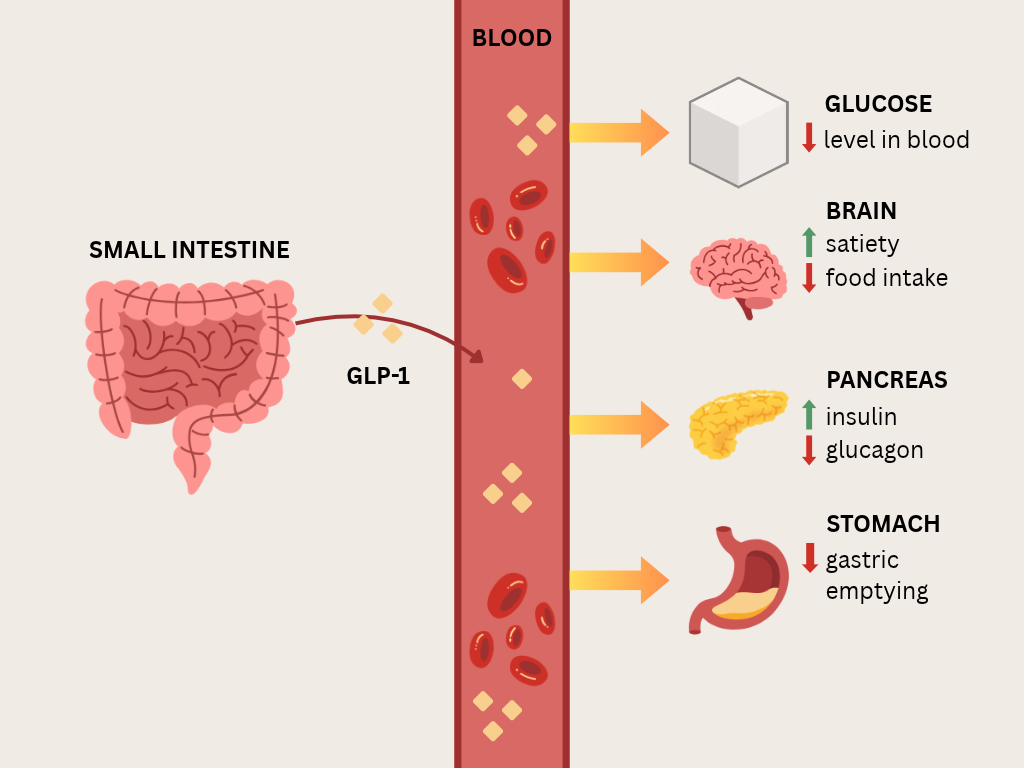
Figure 1. The effects of the GLP-1 hormone in the body after food intake.
Dual-Action Therapy – Tirzepatide
Another weight management medication, tirzepatide (Mounjaro), acts not on one, but on two receptor systems – GLP-1 and GIP.
GIP, or glucose-dependent insulinotropic polypeptide, is also a hormone released in the intestines that contributes to the regulation of the body's metabolism. Together with GLP-1, it influences insulin release, blood glucose levels and energy balance.
Tirzepatide activates the receptors of both hormones, thereby acting on two complementary processes.
Combination Therapy Affecting Appetite – Naltrexone and Bupropion
Mysimba has a different mechanism of action. It combines two active substances – naltrexone and bupropion.
These substances act on brain systems involved in regulating appetite, eating behaviour and the reward response associated with food. Bupropion affects dopamine and noradrenaline signalling and is therefore commonly used to treat depression, while naltrexone acts on opioid receptors and is used in the treatment of addictions. The combined action of these two substances may help reduce hunger and food cravings.
Although the aim of these medications is also weight management, their mechanisms of action differ considerably: the effects of naltrexone and bupropion are primarily directed at the brain, whereas GLP-1 agonists and tirzepatide affect physiological digestive processes.
Side Effects
Although the effects produced by weight management medications are desirable from a treatment perspective (reduced appetite, slower digestive processes, and regulation of insulin release and blood glucose levels), changing the dose too quickly can cause the same processes to result in unpleasant gastrointestinal side effects:
- Bloating
- Nausea
- Constipation or diarrhoea
- Vomiting
- Abdominal discomfort
Why Can the Same Medication Affect People Differently?
Every person is unique, and this also applies to how our bodies process and respond to medications.
One reason is the small, inherited differences in our DNA. These can influence both how quickly the body processes a particular medication and how sensitive the receptors targeted by that medication are.
Pharmacogenetics (PGx) is a scientific field that studies the relationship between a person's genetics and their body's response to medications.
Three genes are particularly important for the action of weight management medications:
GLP1R – The GLP-1 Receptor Gene
This gene contains the instructions for producing the GLP-1 receptor, which is activated by medications such as semaglutide and liraglutide.
Changes in the GLP1R gene may result in changes to the receptor's structure, potentially making it more difficult for the corresponding hormones and medications to bind to the receptor. This may affect treatment effectiveness and tolerability.
GIPR – The GIP Receptor Gene
The GIPR gene is responsible for producing the GIP receptor, which is one of the targets of tirzepatide.
Recent studies suggest that activation of GIP receptors generally reduces the nausea-inducing effects caused by GLP-1 receptors. Therefore, changes in the GIPR gene may affect GIP receptor activity and potentially increase the risk of possible side effects (Su et al., 2026).
CYP2B6 – The Drug Metabolism Gene
Unlike GLP1R and GIPR, which encode drug target receptors, CYP2B6 is involved in the production of a liver enzyme that contributes to the metabolism of certain medications.
One medication that the CYP2B6 enzyme converts into its active form is bupropion. Changes in the CYP2B6 gene may potentially result in higher or lower concentrations of active drug forms in the body and, consequently, alter the response to bupropion and naltrexone therapy.
What Can a Pharmacogenetic Test Reveal?
The GenEra Weight Management Medication Pharmacogenetic Test analyses three genes associated with the action of specific weight management medications (GLP1R, GIPR and CYP2B6), examining six genetic variants within them.
The test results provide information about four active substances:
- Liraglutide – a GLP-1 receptor agonist;
- Semaglutide – a GLP-1 receptor agonist;
- Tirzepatide – a GLP-1 and GIP receptor agonist;
- Bupropion – an antidepressant used in combination with naltrexone in weight management medications.
The test report summarises the results to help doctors assess the body's potential response to specific medications, including:
- Whether a typical response is expected;
- Whether changes in how the body metabolises medications may occur;
- Whether there are genetic factors that could be associated with differences in treatment effectiveness or tolerability.
For example, if certain GLP1R or GIPR variants are identified in a person's genetic profile, a doctor may take this information into account when selecting the most appropriate therapy, assessing its tolerability and determining whether the course of treatment should be monitored more closely.
It is important to understand that a genetic test cannot predict the exact number of kilograms a person will lose, nor does it guarantee that one medication will be more effective than another. It provides additional information about certain genetic factors that may influence the body's response to treatment.
Do Genetics Determine Everything?
Definitely not. Genetics is only one part of the bigger picture. A person's response to weight management medications is also influenced by age, health status, metabolism, other medications being taken, liver and kidney function, lifestyle, dietary habits, the selected dose and the duration of treatment.
Furthermore, scientific research into the effects of genetic variations on GLP-1 therapy, on which the developed pharmacogenetic test is based, is still ongoing. Although interesting associations between certain genetic variants and the body's response to treatment have already been identified, not all findings to date have sufficient evidence to serve as a reliable basis for medication selection.
Therefore, a pharmacogenetic test should be considered an additional source of information for the doctor, rather than a diagnosis or a treatment plan. Regardless of the genetic test results, decisions about medication use, selection and dosage are made by the doctor, taking the patient's individual health status into account.
Better Understanding of Your Body – Including When Choosing Treatment
Weight management is about much more than the number on the scales. It is a complex health topic involving metabolism, hormones, genetics and many other factors.
Modern medicine is increasingly moving towards a personalised approach, in which treatment decisions are made by considering not only the diagnosis but also each individual's unique characteristics.
The GenEra Weight Management Medication Pharmacogenetic Test is one way to gain additional insight into your genetic profile and your body's potential response to medications.
The test is performed using a saliva (buccal swab) sample, and the results are presented in a comprehensive report explaining the genetic variants and providing therapeutic recommendations for the doctor.
Learn more about your genetic profile and explore the possibilities offered by science for more personalised healthcare!
The information in this article is intended for educational purposes and does not replace a consultation with a doctor. Pharmacogenetic test results should be interpreted together with other clinical information. Medication use, discontinuation or dosage changes must not be based solely on genetic test results.
References
- European Medicines Agency (EMA). Mounjaro (tirzepatide) mechanism of action: https://www.ema.europa.eu/en/documents/product-information/mounjaro-epar-product-information_en.pdf
- EMA. Mysimba (naltrexone and bupropion) information: https://www.ema.europa.eu/en/medicines/human/EPAR/mysimba
- EMA. Saxenda (liraglutide) information: https://www.ema.europa.eu/en/medicines/human/EPAR/saxenda
- EMA. Wegovy (semaglutide) mechanism of action and product information: https://www.ema.europa.eu/en/documents/product-information/wegovy-epar-product-information_en.pdf
- BouSaba, J., Vosoughi, K., Dilmaghani, S., Prokop, L. J., & Camilleri, M. (2023). Pharmacogenetic interactions of medications administered for weight loss in adults: a systematic review and meta-analysis. Pharmacogenomics, 24(5), 283–295. https://doi.org/10.2217/pgs-2022-0192
- Levy, M.E., Schiabor Barrett, K.M., Telis, N. et al. Rare GLP1R variants attenuate weight loss with semaglutide but not tirzepatide. Nat Metab (2026). https://doi.org/10.1038/s42255-026-01656-z
- Su, Q.J., Ashenhurst, J.R., Xu, W. et al. Genetic predictors of GLP1 receptor agonist weight loss and side effects. Nature 653, 770–775 (2026). https://doi.org/10.1038/s41586-026-10330-z